Why One Picasso Painting Stopped Me in My Tracks: What Kabbalah Taught Me About the Energy Hidden in Everything We Create
A quiet museum in Helsinki, one painting that refused to let me pass, and a teaching of Rav Yehuda Ashlag on Dvekut — why every creation carries the consciousness of its creator.
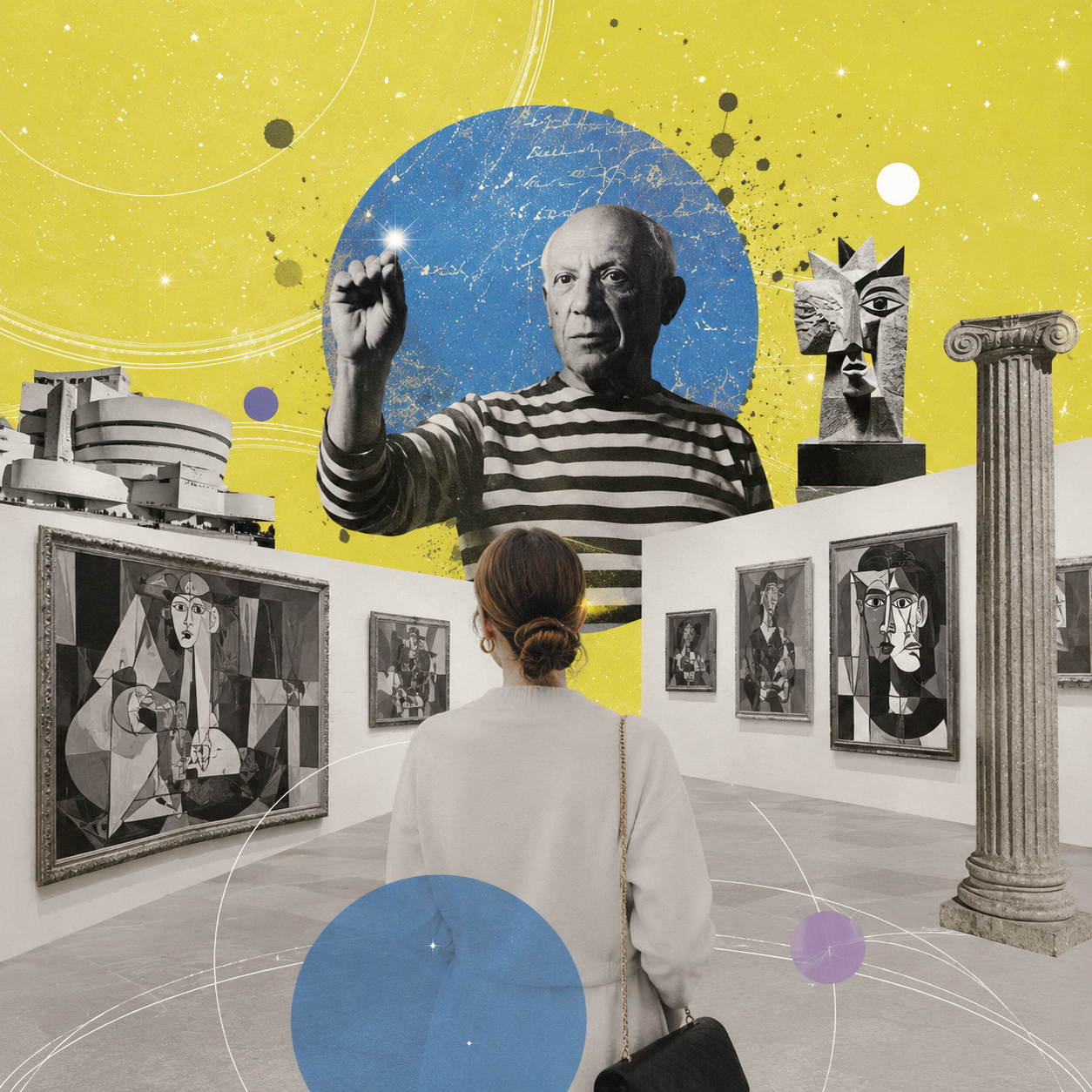
Have you ever been walking through a museum when one painting simply refuses to let you pass?
Not because it's the biggest. Not because it's surrounded by crowds. Not because you even know who painted it.
But because... you feel something.
That happened to me recently.
I was visiting a modern art museum somewhere in Europe — if I remember correctly, it was in Helsinki, Finland. Museums have always been one of my greatest joys. Ever since I was nineteen and moved to Madrid to study, I developed a little ritual whenever I traveled. I would visit the city's museums, join a walking history tour — usually with a local guide — and immerse myself in the stories, culture, and history of every place I visited.
I loved learning. Every city became another classroom.
But somewhere along the way, something changed.
Lately, I noticed that museums no longer excited me in the same way. In fact, these days it would probably take a lot to convince me to buy a museum ticket — even if it featured artists I deeply admire, like Frida Kahlo, Salvador Dalí, or Alphonse Mucha.
At first, I wondered what was wrong with me. Had I lost my curiosity?
Then I realized something surprising. Maybe my soul wasn't looking for more information anymore. Maybe it was looking for something deeper.
Letting the Paintings Choose Me
So, on that particular day, I made a decision.
- I wasn't going to read every description.
- I wasn't going to study every artistic movement.
- I wasn't going to try to learn anything.
Instead, I would simply walk. Quietly. Without expectations.
“I decided to let the paintings choose me.”
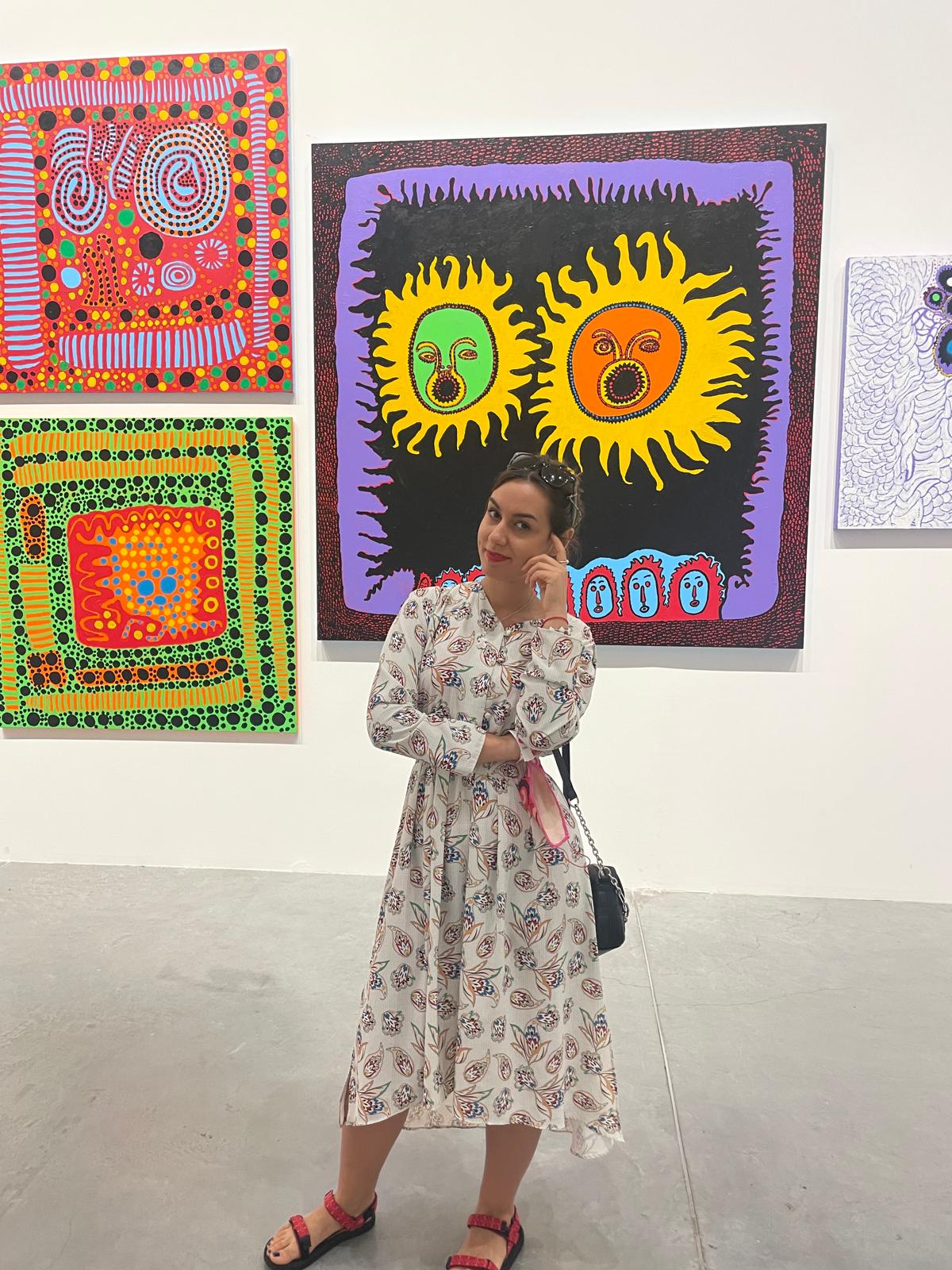
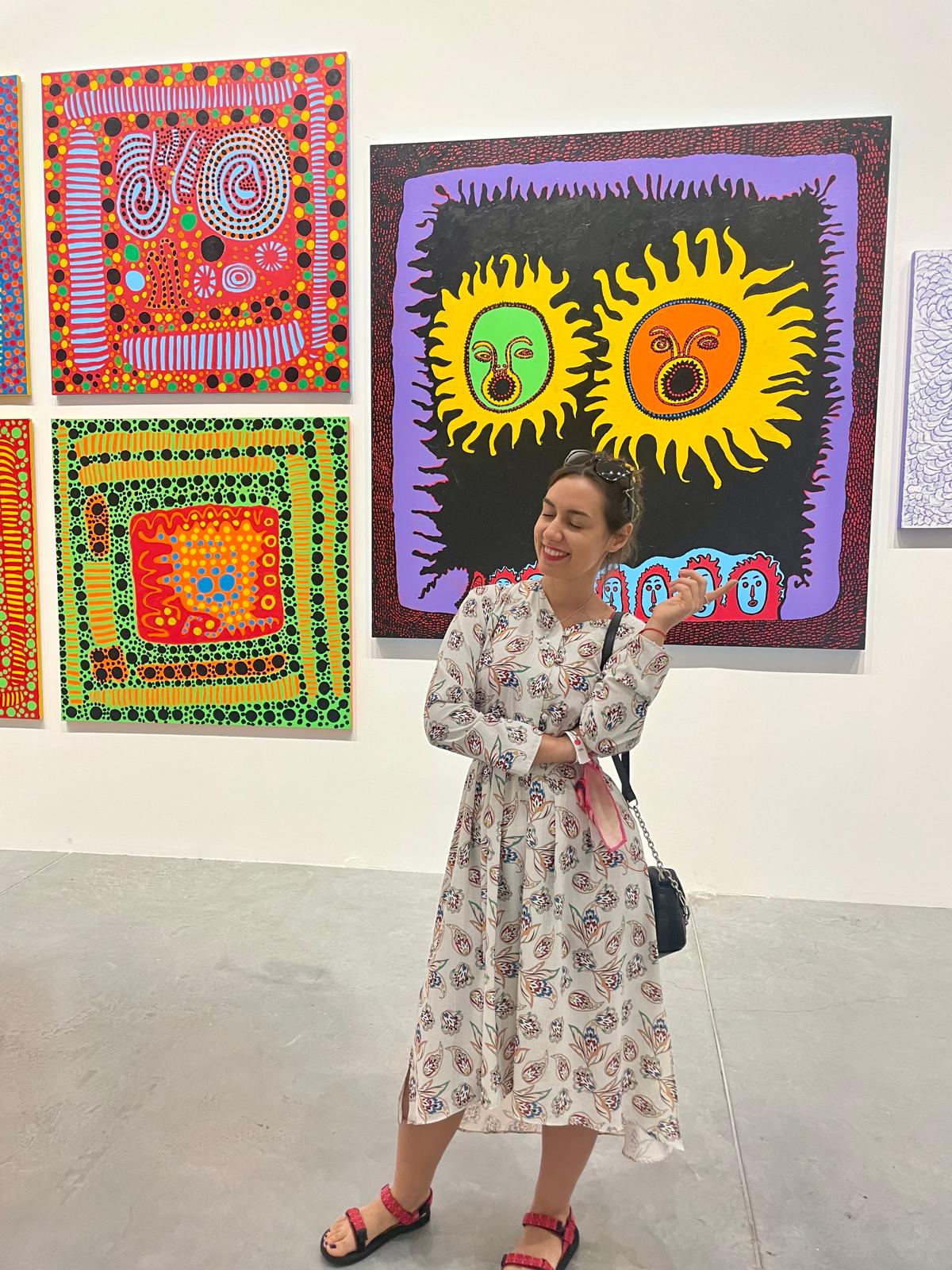
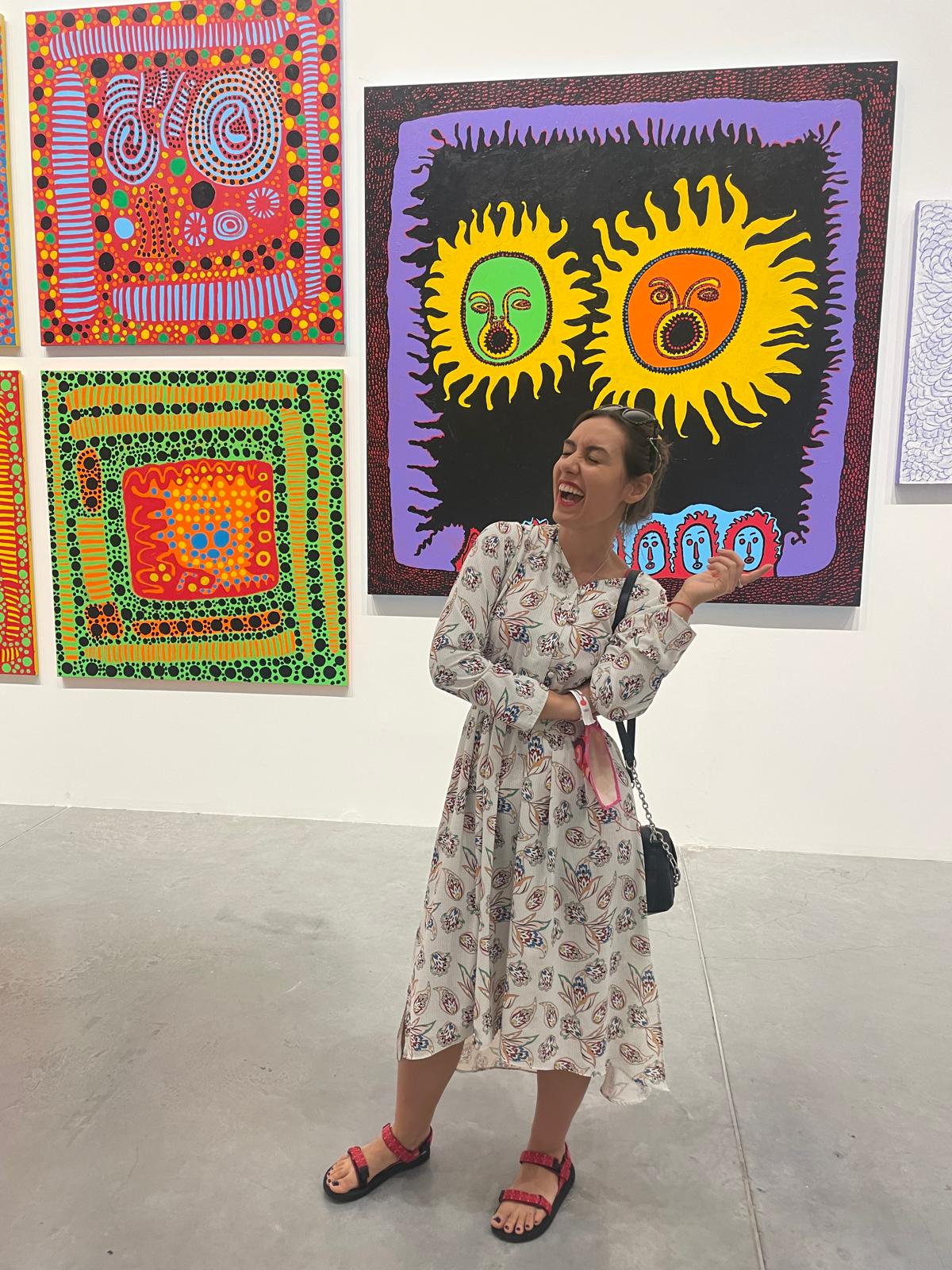
Among dozens of beautiful contemporary works, I suddenly stopped.
There was something about one painting. I couldn't explain it.
It wasn't larger than the others. It wasn't displayed in a prestigious room. It wasn't surrounded by people taking photographs.
It was simply hanging there among many other artists — many of whom were exploring a similar geometric, cubist-inspired visual language. At first glance, several of the paintings shared the same artistic vocabulary.
And yet... only one of them stopped me in my tracks.
Before I knew whose painting it was, I had already felt the presence behind it.
Only then did I look at the small plaque beside it. I had to read it twice.
“Picasso.”
I smiled. Not because I had recognized his style. But because I had recognized something far more difficult to describe. His presence.
It wasn't simply paint on canvas. It felt as though part of the artist himself was still alive within the work.
Months later, while studying a lecture by Michael Berg on the teachings of Rav Yehuda Ashlag on Dvekut (דבקות), I found words for something I had experienced intuitively that day in the museum.
That's one of the things I love most about Kabbalah. It rarely asks us to believe something new. Instead, it gives language to truths we've already experienced — but perhaps never fully understood.
Every Creation Carries the Creator
Rav Ashlag explains something profoundly simple: everything that is created carries within it the essence of its creator.
Think about it. A master carpenter doesn't simply build a table.
- The table carries his patience.
- His attention to detail.
- His intention.
- His craftsmanship.
- Even the emotional state he was in while creating it becomes woven into the finished piece.
The same is true for a painting. When we stand in front of a work of art, we aren't only seeing color and technique. We're meeting a piece of another human being. Their thoughts. Their emotions. Their consciousness.
“The difference isn't always technical mastery. Sometimes it's the consciousness behind the brush.”
Perhaps that's why some works move us to tears while others leave us completely untouched.
What Is Dvekut?
In Kabbalah, the purpose of study isn't simply to become knowledgeable. It is to achieve Dvekut, a Hebrew word often translated as cleaving, attachment, or union with the Creator.
But how do we unite with the Creator? Rav Ashlag offers a beautiful analogy.
Imagine trying to understand an artist through their painting. Not just appreciating the colors. Not just admiring the technique. But asking:
- What was this person feeling?
- What were they trying to express?
- Why did they choose this form instead of another?
As you genuinely try to understand the creator through the creation, your mind gradually begins to think like theirs. For a moment, your consciousness aligns with theirs. That is Dvekut on a human level.
The more accurately we understand the spiritual principles behind Creation, the more our consciousness begins to resemble the consciousness of the Creator. That alignment is Dvekut.
Wanting to Understand Isn't Enough
One idea from Rav Ashlag especially stayed with me. It's not enough to try. We must also strive to understand correctly.
Imagine looking at a painting and concluding that the artist painted it in joy, when in reality they created it through profound grief. You sincerely attempted to understand them. But your understanding wasn't accurate. Your mind never truly met theirs.
The same is true in spiritual study. Reading Kabbalah isn't about collecting fascinating concepts. It's about refining our perception until it becomes closer and closer to truth.
“Because only truth creates genuine connection.”
Maybe That's Why Picasso Found Me
Looking back, I don't think Picasso's painting captured my attention because he was famous. In fact, I didn't even know it was his until after I had stopped.
I think it happened because, for the first time in a long while, I wasn't trying to analyze. I wasn't trying to learn. I wasn't trying to collect another piece of knowledge. I was simply present.
And presence allows us to perceive things that information alone often cannot. Perhaps that's true not only in museums, but in life.
“Sometimes we become so busy collecting knowledge that we forget to experience wisdom.”
Sometimes we search for louder voices, bigger signs, and more impressive teachers, while the deepest truth is quietly waiting for us to become still enough to recognize it.
- Every creation carries something of its creator.
- Every conversation carries something of the speaker.
- Every home reflects the people who live in it.
- Every business reflects the consciousness of the person who built it.
And perhaps that is why our greatest work is never simply what we create. Our greatest work is who we become while creating it.
Because long after the brush is put down, the book is published, the business is built, or the session with a client has ended... our consciousness remains.